Showing posts with label Vacation in Belize. Show all posts

Sunday, May 2, 2010

Belize's Ocelot!!

The Ocelot's appearance is similar to that of the domestic cat. Its fur resembles that of a Clouded Leopard or Jaguar and was once regarded as particularly valuable.  As a result,  hundreds of thousands of ocelot have been killed for their fur.  The feline was classified a "vulnerable" endangered species from 1972 until 1996, but is now rated "least concern" by the 2008 IUCN Red List.
The Ocelot measures up to 3 feet   2 inches in length,  with a 1 foot 6 inches tail , and weighs 25–35 pounds. While similar in appearance to the Onicella and Margay, which also inhibits Belize,  the Ocelot is larger. It has the lowest resting body temperature of any feline. It has a tawny to reddish-brown coat marked with black spots and rosettes. The fur is short, and lighter beneath.  There are single white spots, on the backs of the ears, and there are two black lines on either side of the face. It has a black-banded tail.
The Ocelot is mostly nocturnal and very territorial.  It will fight fiercely, sometimes to the death, in territorial disputes. In addition, the cat marks its territory with especially pungent urine.  Like most felines, it is solitary, usually meeting only to mate.  However, during the day it rests in trees or other dense foliage, and will occasionally share its spot with another Ocelot of the same-sex.  When mating, the female will find a den in a cave in a rocky bluff, a hollow tree, or a dense (preferably thorny) thicket. The gestation period is estimated to be 70 days. Generally the female will have two or three kittens in the autumn, born with their eyes closed and a thin covering of hair.
Ocelots hunt over a range of 7 square miles, taking mostly small mammals (deer, various rodents), reptiles and amphibian (lizards, turtles and frogs), crabs, birds and fish. Almost all of the prey that the Ocelot hunts is far smaller than itself.  Studies suggest that it follows and finds prey via odor trails, but the Ocelot also has very good vision, including night vision. The white rings around the Ocelot's eyes help to reflect extra light into the eye at night. Source


Tuesday, April 27, 2010

Belize's Nassau Grouper!!

The Nassau Grouper is  the most important of the groupers for commercial fishery in the West Indies but has been endangered by overfishing.
The Nassau grouper is a U.S. National Marine Fisheries Service Species of Concern.  Species of Concern are those species about which the U.S. Government’s National Oceanic and Atmospheric Administration, National Marine Fisheries Service, has some concerns regarding status and threats, but for which insufficient information is available to indicate a need to list the species under the U.S. Endangered Species Act.
The Nassau grouper is a medium to large fish, growing to over a meter in length and up to 55 pounds in weight. It has a thick body and a large mouth, which it uses to "inhale" prey. Its color varies depending on an individual fishes circumstances and environment. In shallow water (up to 60 feet), the grouper is a tawny color, but specimens that live in deeper waters are pinkish or red, or sometimes orange-red color. Superimposed on this base color are a number of lighter stripes, darker spots, bars and patterns including black spots below and behind the eye, and a forked stripe on the top of the head.
The Nassau grouper lives in the sea, preferring to be near the reef; it is one of the largest fish to be found around Coral Reefs. It can be found anywhere from the shoreline to nearly water that are up to 100 m deep.  It is a solitary fish, feeding in the daytime, mainly on other fish and small crustaceans like crabs and small lobsters. It spawns in December and January, always around the time of the full moon, and always in the same locations. By the light of the full moon, huge numbers of the grouper cluster together to mate in mass spawning. One reason the Nassau Grouper fisheries are so depleted is that its huge spawning groups make easy targets for fishermen, who scoop up large numbers of reproducing fish, who then can obviously not reproduce. Many other grouper and snapper species are in trouble of becoming endangered or extinct for the same reason.
The Nassau grouper is fished both commercially and for sport, it is less shy than other groupers, and is readily approached by scuba divers;  However,  its numbers have been sharply reduced by overfishing in recent years, and it is a slow breeder. Furthermore its historic spawning areas are easily targeted for fishing, which tends to remove the reproductively active members of the group. The species is therefore highly vulnerable to overexploitation, and is recognized as endangered on the IUCN Red List. The governments of the United States, the Cayman Islands and the Bahamas have banned fishing for the Nassau Grouper in recent years. In the Cayman Islands fishing in the spawning holes of the grouper has been banned until the end of 2011, and in the case of the Bahamas fishing for the groupers in the months of December 2003 to February 2004 was also stopped. The Nassau Grouper is in a very high rate decline and is at serious risk of becoming extinct.Source.


Thursday, March 25, 2010

Belize

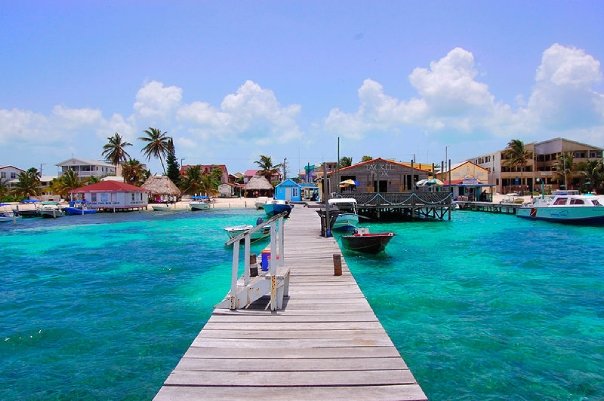
Belize really is Mother Nature's best kept secret, No doubt!!!!